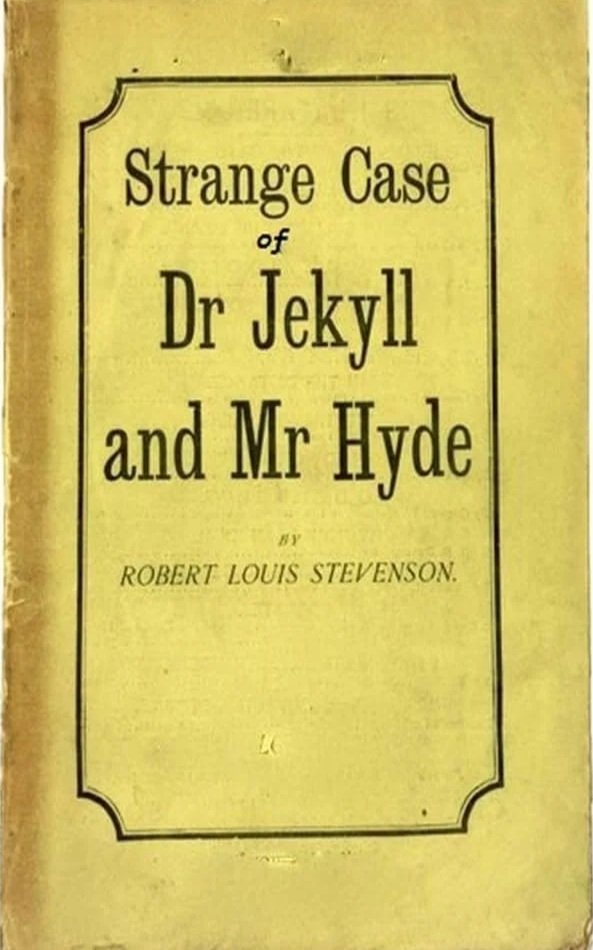
The Strange Case of Dr. Jekyll and Mr. Hyde probes the duality of human nature, repressed desires, and moral hypocrisy (the conflict of inner desires and reputation). It also examines the anxiety towards unlimited scientific development and the necessity of applying ethical responsibility to science.
Academic Articles
-
Ganz examines the conflict of the intellectual test of insanity created by the M’Naghten Rules, the inability to recognize acts or their wrongfulness, and psychiatric viewpoints promoting for recognition of emotional or volitional disorders. Ganz argues that Stevenson emphasizes individual moral accountability, Jekyll’s actions, choice, and the deliberate development of his Hyde rejects the use of uncontrollable impulse as a defense. Through the interaction of anxieties about genetics, free will, and the developing classification of insanity, Stevenson asserts the significance of individual culpability.
GANZ, MELISSA J. “Carrying On Like a Madman: Insanity and Responsibility in The Strange Case of Dr. Jekyll and Mr. Hyde.” Nineteenth-Century Literature, vol. 70, no. 3, 2015, pp. 363–97. JSTOR, https://www-jstor-org.ezproxy.waterfield.murraystate.edu/stable/26377118. Accessed 23 Mar. 2026.
-
O'Dell examines the late Victorian social hierarchy in Dr. Jekyll and Mr. Hyde. He argues that the novella is a multifaceted social interpretation on status, cultural agency, and Victorian genteel principles during social turmoil. The author emphasizes the pliability of characters as a means for expressing social and political anxieties rather than emotional complexity. O'Dell contends the novella demonstrates apprehension from disputes of social limitations instead than changes in class associations, stressing restoration over revolution.
O’Dell, Benjamin D. “Character of Crisis: Hegemonic Negotiations in Robert Louis Stevenson’s The Strange Case of Dr. Jekyll and Mr. Hyde.” Victorian Literature and Culture, vol. 40, no. 2, 2012, pp. 509–21. JSTOR, http://www.jstor.org.ezproxy.waterfield.murraystate.edu/stable/41819955. Accessed 23 Mar. 2026.
-
E. D. Cohen' considers the conflicting ideas of masculinity in Dr. Jekyll and Mr. Hyde. Cohen asserts that the novel scrutinizes the juxtaposition of opposing models of male identity during the Victorian era. The novel expresses the paradoxes between genetic manliness and socially structured manhood founded in class, sexual behavior, and national identity. He argues legal and medical approaches of knowledge used by the characters neglect to comprehend the multifaceted properties of male identity. He incorporates historical perspectives, linking the novel with cultural concerns about male aggression and sexuality. Moreover, Cohen stresses the novel’s fragmentation in masculinity, socially accepted and disturbing nonconforming compulsions.
Cohen, E. D. “Hyding the Subject?: The Antinomies of Masculinity in ‘The Strange Case of Dr. Jekyll and Mr. Hyde.’” NOVEL: A Forum on Fiction, vol. 37, no. 1/2, 2003, pp. 181–99. JSTOR, http://www.jstor.org.ezproxy.waterfield.murraystate.edu/stable/30038535. Accessed 23 Mar. 2026.
-
Janice Doane and Devon Hodges explore the complex interplay of gender and identity, highlighting how the characters of Dr. Jekyll and Mr. Hyde embody both masculine and feminine traits, challenging traditional Victorian notions of gender roles. It discusses the cultural anxieties surrounding sexuality and identity during a time of shifting gender dynamics, suggesting that the story reflects a collaboration between masculine and feminine elements that subvert fixed identities. The authors argue that the narrative reveals the instability of gender and the transformative power associated with both male and female identities, ultimately questioning the rigid boundaries of sexual difference and the implications of collaboration in writing, particularly in the context of Stevenson's marriage to Fanny Vandegrift.
Doane, Janice, and Devon Hodges. “Demonic Disturbances of Sexual Identity: The Strange Case of Dr. Jekyll and Mr/s Hyde.” NOVEL: A Forum on Fiction, vol. 23, no. 1, 1989, pp. 63–74. JSTOR, https://doi-org.ezproxy.waterfield.murraystate.edu/10.2307/1345579. Accessed 13 Apr. 2026.
-
Stephen D. Arata explores the complex themes of professionalism and atavism in Robert Louis Stevenson's novella, highlighting how the characters reflect late-Victorian anxieties about social class, criminality, and the nature of identity. Arata discusses how the novel's portrayal of Dr. Jekyll and Mr. Hyde serves as a commentary on the professional class, suggesting that the narrative critiques the moral and ethical implications of professionalism while also engaging with contemporary theories of degeneration. The analysis emphasizes the interplay between societal expectations and individual desires, illustrating how Hyde embodies both the fears of the bourgeoisie and the darker impulses that lie beneath the surface of civilized society. Through this examination, Arata positions Stevenson's work as a significant reflection on the tensions between personal identity and societal norms during a time of rapid change.
ARATA, STEPHEN D. “The Sedulous Ape: Atavism, Professionalism, and Stevenson’s ‘Jekyll and Hyde.’” Criticism, vol. 37, no. 2, 1995, pp. 233–59. JSTOR, http://www.jstor.org.ezproxy.waterfield.murraystate.edu/stable/23116549. Accessed 13 Apr. 2026.
Alternative Text
-
Set in the Channel Islands, “White Magic” is a New Woman literature work detailing a discussion between the narrator and his/her friend Mauger. Through her description of folklore and superstition, D’Arcy investigates topics of science and superstition, as well as typecasts related to women and romantic love.
-
This fairy tale is set in a London home and observes mystical artistic works for one hour in which they awaken. Although only paintings and dolls, their exchanges investigate conflicts in courtship and class disparities within 19th-century society.
-
A tale in which a scientist seeking the supernatural capability of reading others’ minds accepts an adapted Faustian arrangement, eventually realizing this extraordinary skill impedes his life, compelling him to discard the ability. Hook criticizes the Victorian interests of authority and social status as well as the dangers of scientific pursuit.
-
“The Purple Death” is about a mad scientist’s desire to help the poor and oppressed by decreasing their numbers. He believes overpopulation is the cause of the planet’s complications. He creates a remedy; a disease that can kill mass populations. This short story comments on anxieties related to scientific advancement and responsibility.
-
After discovering the formula for immortality Dr. Rutherford longs for deceased wife while attempting to save the life of a young woman. This story evaluates the lasting effects of immortality and dangers disregarding universal principles of nature for scientific discovery.
-
It is the story of a woman struggling to repel her rising anxiety and insanity while anticipating the death of her husband. “Death” addresses the inevitability of death, the concept of the soul, anxieties of the afterlife, and psychological instability.
-
This tale recounts how a wealthy Victorian household is upset by a questionable death. A doctor witnesses the dubious and irregular behavior of those around him, and his encounters steer him to the vital information that is more ominous than he expected. This short story explores theme of mental instability and rationality.